Status Configuration
Status Configuration allows administrators to define and manage account statuses used throughout DebtRecoup.
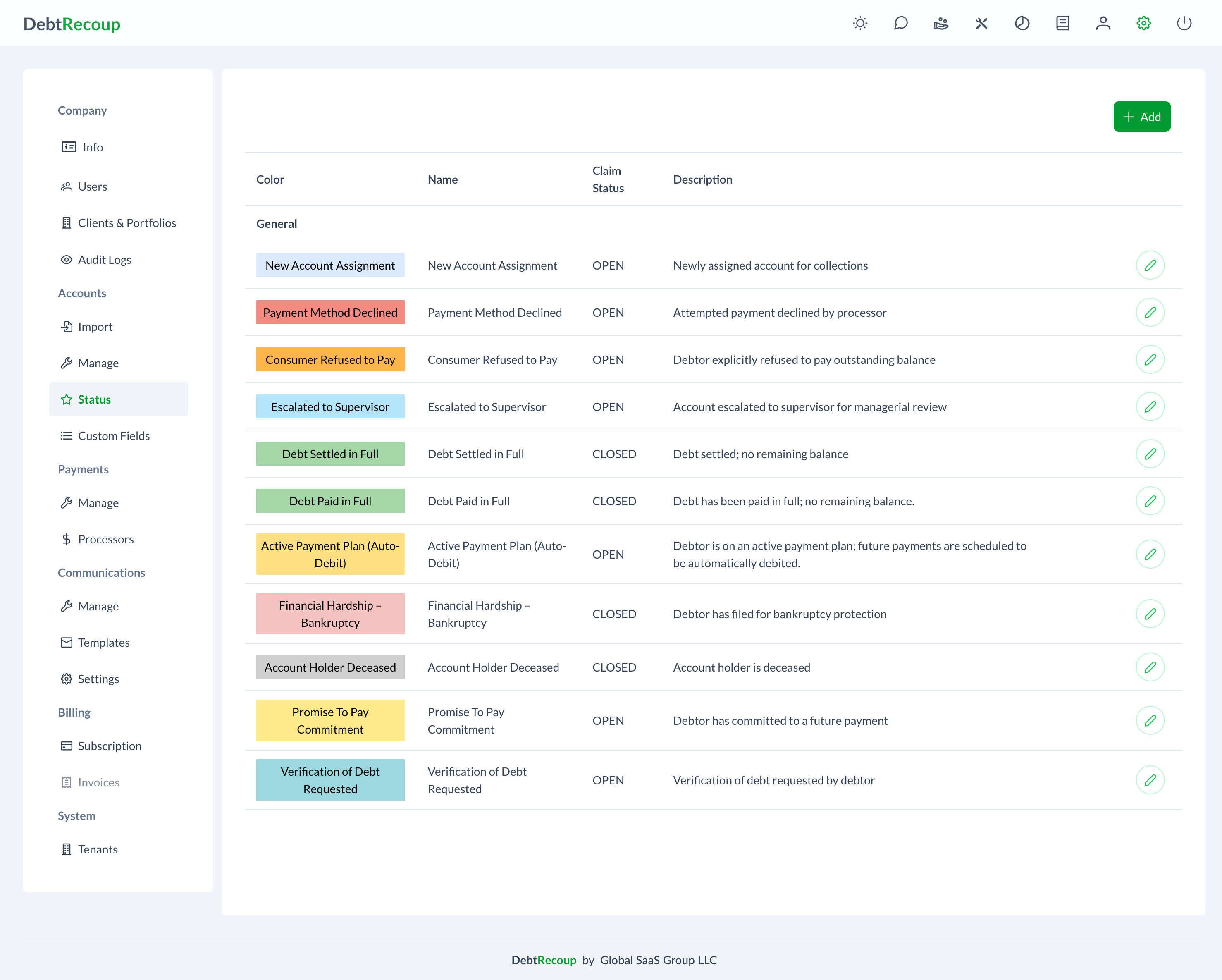
Accessing Status Configuration
- Navigate to Administration in the main menu
- Under Accounts, select Status
Understanding Account Statuses
Status Properties
Each status has the following properties:
| Property | Description |
|---|---|
| Name | Display name for the status |
| Type | Category grouping; select an existing type or enter a custom type |
| Color | Visual indicator for quick recognition |
| Claim Status | Whether accounts with this status are OPEN or CLOSED |
| Description | Optional notes about when to use this status |
| Who Can Set | Permission required to apply this status |
| Who Can Unset | Permission required to change from this status |
Status Types
Statuses are grouped by type. The Type field loads existing tenant status types and also accepts a new custom value, so the exact type list depends on your configuration.
Claim Status
Each status is either:
- OPEN - Account is active and being worked
- CLOSED - Account is no longer active
Creating Statuses
Add New Status
- Click the Add button
- Fill in the status details:
| Field | Description |
|---|---|
| Color | Select or enter a hex color code |
| Type | Select a category or enter a custom type |
| Name | Status display name (required) |
| Claim Status | OPEN or CLOSED |
| Description | Optional usage notes |
| Who Can Set | Permission level required to apply |
| Who Can Unset | Permission level required to change from |
- Click Save
Permission Levels
Set who can apply or remove a status:
| Option | Description |
|---|---|
| Everyone | All users including Collectors |
| Managers or above | Managers, Supervisors, Administrators |
| Supervisors or above | Supervisors and Administrators |
| Only Administrators | Administrators only |
Managing Statuses
Viewing Statuses
The status list displays all statuses grouped by type:
- Color indicator
- Status name
- Claim status (OPEN/CLOSED)
- Description
- Set and Unset permissions
Editing Statuses
- Click the Edit button (pencil icon) next to a status
- Update the desired fields
- Click Save
The current Status page exposes add and edit actions. It does not expose a delete action.
Using Statuses
Changing Account Status
- Open an account
- Click the pencil icon next to the current status
- Optionally filter by All Types or search by name and description
- Select the new status from the table
- Click Change
Status changes are logged in the account's activity history.
Bulk Status Changes
To change status for multiple accounts:
- Go to Administration > Accounts > Manage
- Filter and select accounts
- Click Change Status To in the toolbar
- Select the new status
- Click Change
See Bulk Status Change for details.
Best Practices
Status Design
- Use clear, unambiguous names
- Apply consistent colors for similar statuses
- Group related statuses under the same type
- Use CLOSED claim status for final/resolved accounts
Permission Settings
- Restrict sensitive statuses (Bankruptcy, Legal) to supervisors or above
- Allow collectors to set common working statuses
- Consider workflow when setting permissions
Troubleshooting
Cannot Change Status
- Check that you have the required permission (Who Can Set)
- Verify the current status allows you to change from it (Who Can Unset)
- Some statuses may require supervisor approval
Missing Status Options
- Verify the status is active and not deleted
- Check your user role permissions
- Refresh the page to load latest statuses
Related Documentation
- Bulk Status Change - Mass status updates
- Manage Accounts - Working with accounts
- Audit Logs - Track status changes